Si stale nahnevany? precitaj si toto a potom sa rozhodni!
One day Buddha was walking through a village. A very angry and rude young man came up and began insulting him. “You have no right teaching others,” he shouted. “You are as stupid as everyone else. You are nothing but a fake.”
Jedneho dna sa Buddha prechadzal po dedine. Jeden velmi nahnevany, nevychovany mlady muz prisiel k nemu a zacal ho napadat. "Nemas pravo ucit druhych" zakrical nanho. "Si rovnako hlupy ako vsetci ostatni. Nie si nic, len si vymyslas."
Buddha was not upset by these insults. Instead he asked the young man “Tell me, if you buy a gift for someone, and that person does not take it, to whom does the gift belong?
Buddhu sa to vobec nedotklo. Namiesto toho sa mladeho muza opytal: "Povedz mi, ak kupis darcek pre niekoho a on si ho nevezme, komu bude tento darcek patrit?"
”The man was surprised to be asked such a strange question and answered, “It would belong to me, because I bought the gift.”
Muz bol zaskoceny takou neobvyklou otazkou a odpovedal: "Mal by patrit mne, pretoze ja som ho kupil."
The Buddha smiled and said, ”That is correct. And it is exactly the same with your anger. If you become angry with me and I do not get insulted, then the anger falls back on you. You are then the only one who becomes unhappy, not me. All you have done is hurt yourself.”
Buddha sa usmial a povedal: "Spravne. A presne tak isto to je aj s tvojim hnevom. Ak si nahnevany a ja zostanem nedotknuty tvojim hnevom, tak tvoj hnev padne na teba. Ty si potom jediny kto zostane nestastny, nie ja. Jedine coho dosiahnes je ze ublizis sam sebe.
“If you want to stop hurting yourself, you must get rid of your anger and become loving instead. When you hate others, you yourself become unhappy. But when you love others, everyone is happy.”
Ak chces zastavit toto sebeublizovanie, musis sa zbavit hnevu a namiesto toho sa stat milujucim. Ked nenavidis ostatnych, ty sam sa stanes nestastnym. Ale ked milujes ostatnych, kazdy je stastny.
Source : www.thebuddhism.net
Every logical person would advise us to use some analytical directions to reach happiness or else we could get lost. But how could we satisfy this common need, this common search for happiness?Greek philosophers gave many answers to that question. Terms such as knowledge and self-awareness, self-improvement, moral virtue, kindness, harmony, freedom and self control are some of the "tools" Greek philosophers suggested as ideal for happiness. Such philosophers are Epictetus, Epicurus and Aristotle: use their "map" on your way to happiness.
Survival Guide, by Epictetus
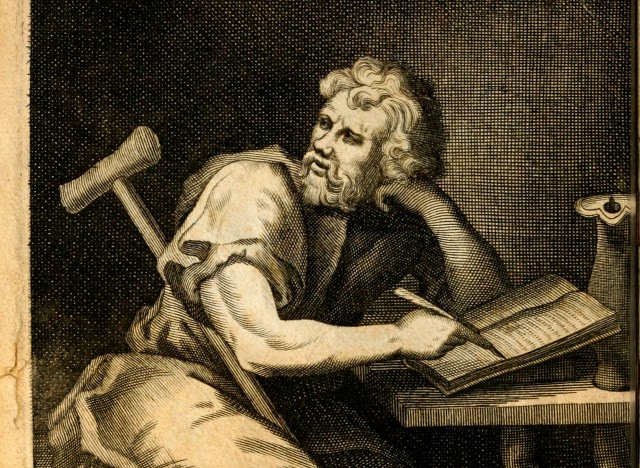 Epictetus (A.D. c. 55 – 135) could be the "father" of a specific phrase: "God, grant me the serenity to accept the things I cannot change, the courage to change the things I can, and the wisdom to know the difference.".
Practise then from the start to say to every harsh impression, "You are an impression, and not at all the thing you appear to be." Then examine it and test it by these rules you have, and firstly, and chiefly, by this: whether the impression has to do with the things that are up to us, or those that are not; and if it has to do with the things that are not up to us, be ready to reply, "It is nothing to me."
Philosophy, Epictetus taught, is a way of life and not just a theoretical discipline. To Epictetus, all external events are determined by fate, and are thus beyond our control; we should accept whatever happens calmly and dispassionately. However, individuals are responsible for their own actions, which they can examine and control through rigorous self-discipline.
"Consider yourself as a slave or as a free being, it depends only on you."
The Garden, by Epicurus
 Epicurus (341–270 BC) was an ancient Greek philosopher as well as the founder of the school of philosophy called Epicureanism. Only a few fragments and letters of Epicurus's 300 written works remain. Much of what is known about Epicurean philosophy derives from later followers and commentators.
It is impossible to live a pleasant life without living wisely and well and justly,
and it is impossible to live wisely and well and justly without living a pleasant life.
Natural justice is a symbol or expression of usefullness, to prevent one person from harming or being harmed by another.
For Epicurus, the purpose of philosophy was to attain the happy, tranquil life, characterized by ataraxia—peace and freedom from fear—and aponia—the absence of pain—and by living a self-sufficient life surrounded by friends. He taught that pleasure and pain are the measures of what is good and evil; death is the end of both body and soul and should therefore not be feared; the gods neither reward nor punish humans; the universe is infinite and eternal; and events in the world are ultimately based on the motions and interactions of atoms moving in empty space.An inscription on the gate to The Garden is recorded by Seneca in epistle XXI of Epistulae morales ad Lucilium: "Stranger, here you will do well to tarry; here our highest good is pleasure"
Eudaimonia in Aristotelian ethics

Since happiness is an activity of soul in accordance with perfect virtue, we must consider the nature of virtue; for perhaps, we shall, thus, see better the nature of happiness.
Aristotle (384–322 BCE) was a Greek philosopher and scientist born in the Macedonian city of Stagirus, in 384 BCE. He believed all peoples' concepts and all of their knowledge was ultimately based on perception. Aristotle's views on natural sciences represent the groundwork underlying many of his works.His ethics, though always influential, gained renewed interest with the modern advent of virtue ethics. All aspects of Aristotle's philosophy continue to be the object of active academic study today.Aristotle considered ethics to be a practical rather than theoretical study, i.e., one aimed at becoming good and doing good rather than knowing for its own sake. He wrote several treatises on ethics, including most notably, the Nicomachean Ethics.Aristotle taught that virtue has to do with the proper function (ergon) of a thing. An eye is only a good eye in so much as it can see, because the proper function of an eye is sight. Aristotle reasoned that humans must have a function specific to humans, and that this function must be an activity of the psuchē (normally translated as soul) in accordance with reason (logos). Aristotle identified such an optimum activity of the soul as the aim of all human deliberate action, eudaimonia, generally translated as "happiness" or sometimes "well being". To have the potential of ever being happy in this way necessarily requires a good character (ēthikē aretē), often translated as moral (or ethical) virtue (or excellence).References: Huffington Post Gr, Wikipedia
